Hello friends,
Two months after launching our local AI setup – based on Ollama running on Ubuntu with a RAG (Retrieval-Augmented Generation) extension – it’s clear: our daily work with documents has significantly changed for the better.
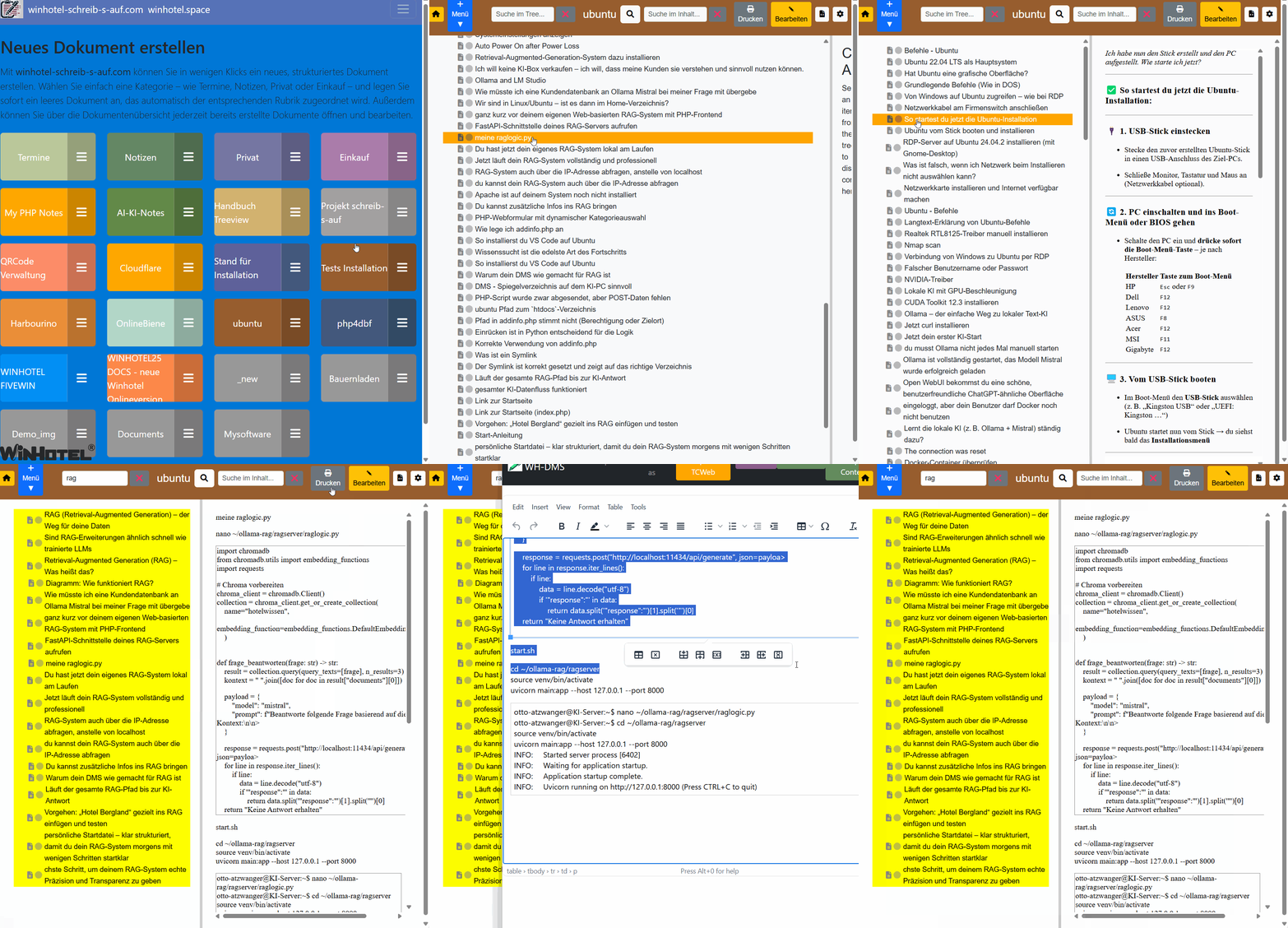
Our Document Management System (DMS) follows a deliberately simple structure: HTML files, JSON metadata, and organized folder hierarchies. Nothing fancy or overly complex. The key difference now is the new AI integration: all contents are automatically transferred into a vector database (Chroma), where they’re indexed and stored with context. The locally installed AI can access this data – and provides clear, accurate answers.
What has changed in practice:
The DMS became a knowledge source: Instead of just storing documents, the AI “understands” their content and can respond meaningfully.
Context-based answers: The AI doesn’t just look for keywords – it intelligently searches across documents and combines relevant information.
Fully automated integration: Every new document automatically becomes part of the knowledge network – without extra effort.
High-quality responses: The answers are precise, easy to understand, and far superior to traditional full-text search.
100% local operation: No cloud, no API fees, no internet dependency – and full control over data privacy.
A surprising bonus:
What really stands out is the practical side effect: Everyone in the company – whether at the front desk, in the kitchen, or in maintenance – contributes to the AI knowledge base simply by writing into the DMS. Without even realizing it. It’s what we’d call effortless knowledge management.
For developers:
Integration is refreshingly simple. You send a text request via the local HTTP API and receive a JSON response. That’s it. Existing applications can easily tap into the system without major changes – but with a huge gain in functionality.
Conclusion:
For us, combining a local DMS with AI is far from a hype. It’s a practical, forward-thinking step – especially for small businesses that want to actively use their internal knowledge instead of just storing it.
Best regards,
Otto