Hello friends,
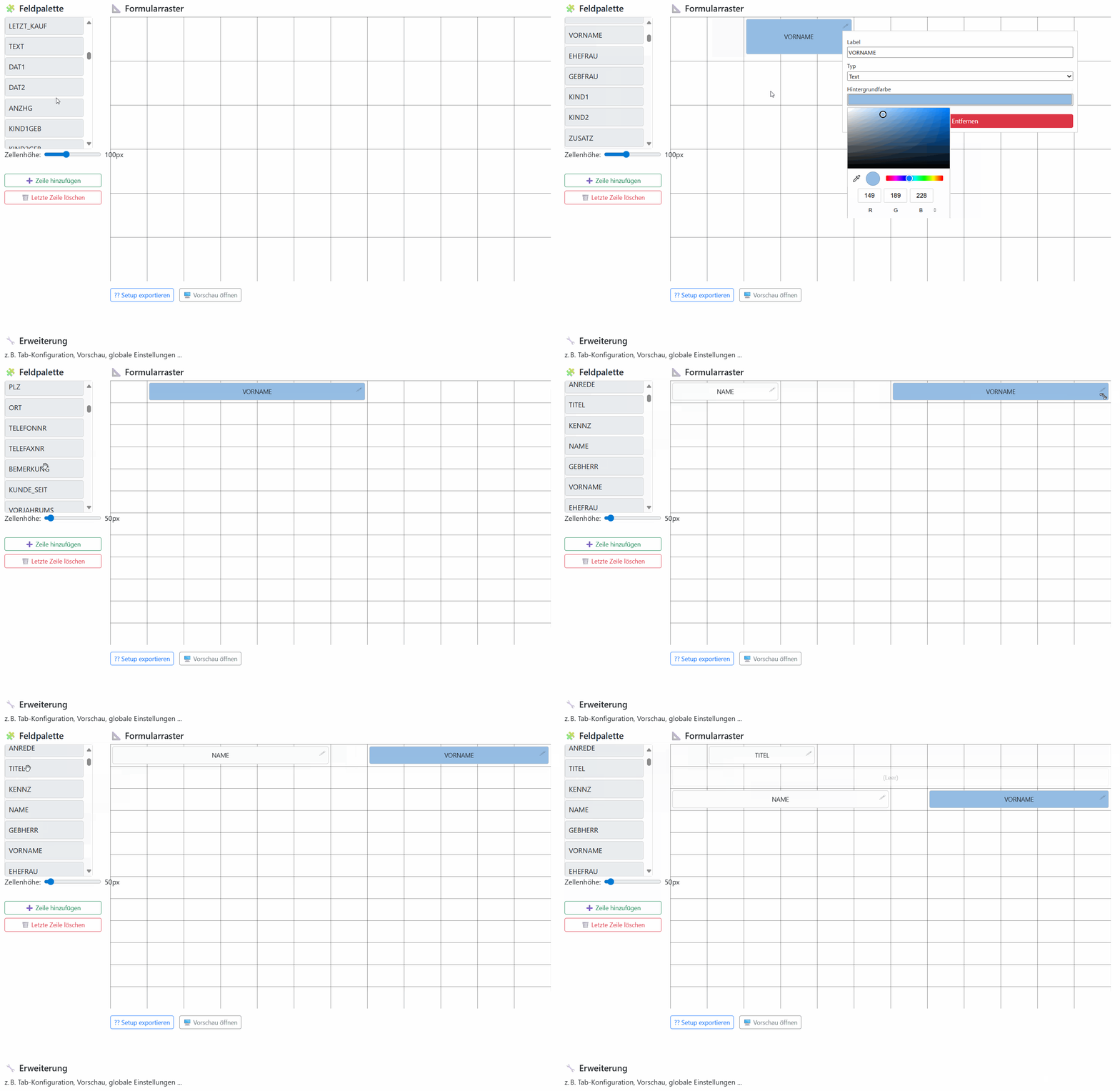
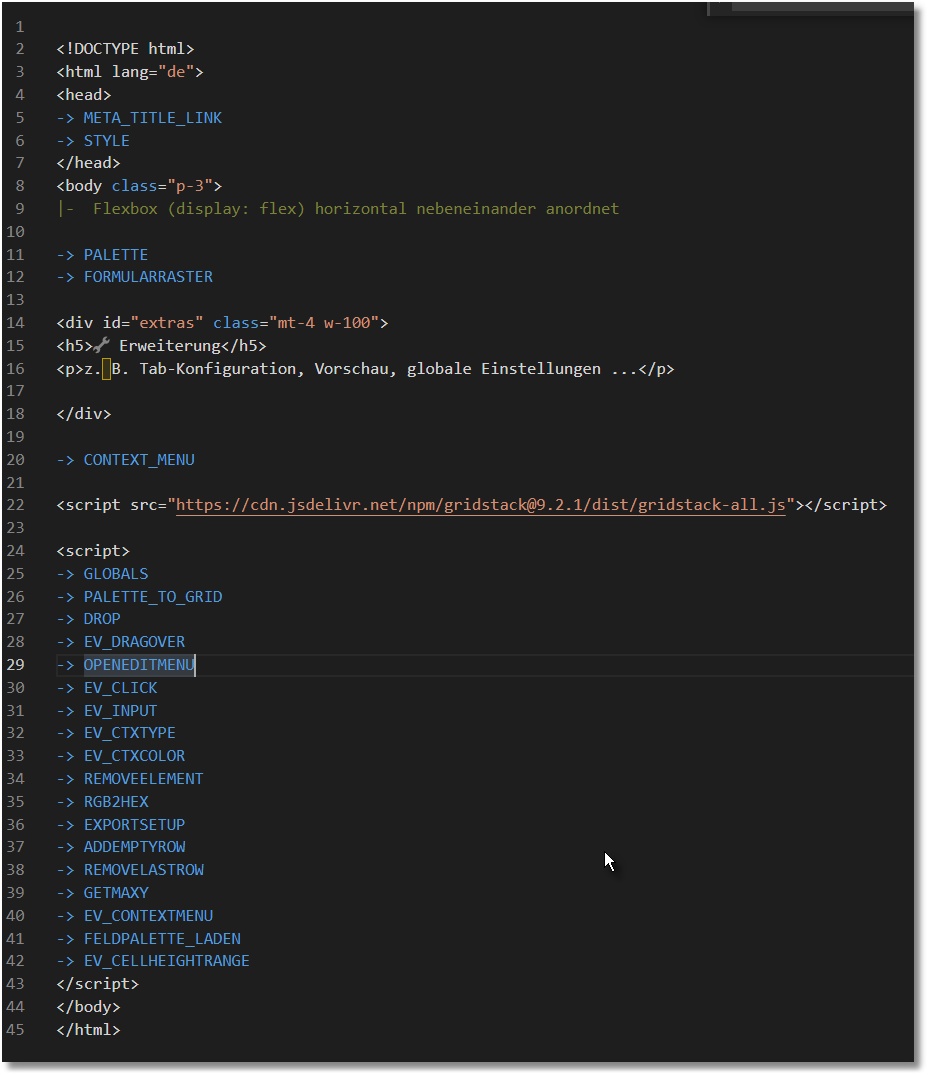
With the working DBU WebClone and native microservice access to .DBF/.CDX files, it becomes clear:
A lightweight microservice backend for DBF files is a fully-fledged, future-proof alternative to traditional SQL database systems – especially for legacy applications in the Xbase/Harbour/Clipper environment.
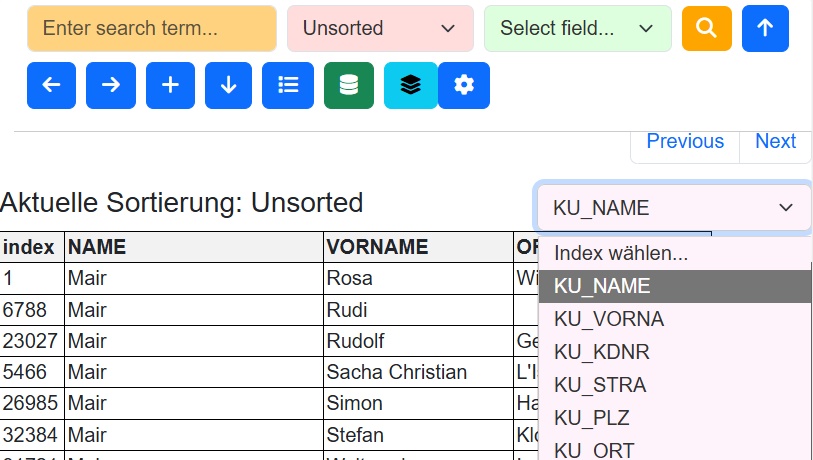
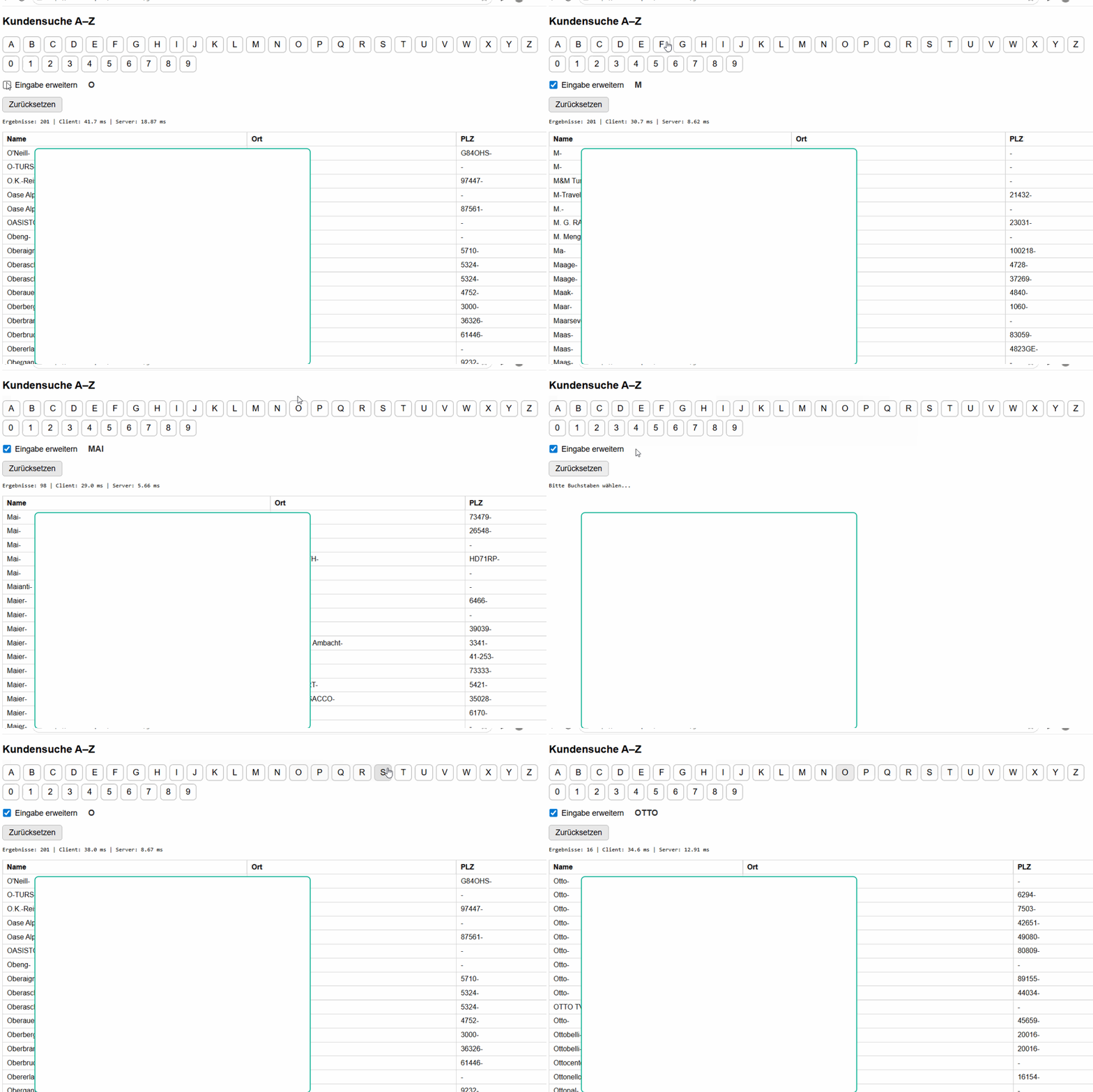
A hotel with 35,000 customer records accesses the data via `xbrowse.php` (HTML/JS).
Editing, searching, and paging occur in real time – no SQL server required, full REST integration,
zero latency on the local server.
A DBF-based microservice is ideal for developers who want to preserve existing applications while modernizing them.
It combines the best of both worlds: the transparency and performance of DBF with the openness of modern web technology.
Best regards,
Otto
With the working DBU WebClone and native microservice access to .DBF/.CDX files, it becomes clear:
A lightweight microservice backend for DBF files is a fully-fledged, future-proof alternative to traditional SQL database systems – especially for legacy applications in the Xbase/Harbour/Clipper environment.
Example application:✅ Advantages over SQL in CRM/ERP applications:
| Advantage | Description |
| ------------------------------- | ------------------------------------------------------------------------------ |
| No migration required | Existing DBF applications remain usable without changes |
| Future-proof development | Modern web UIs, REST/WebSocket, JSON, token auth etc. can be integrated easily |
| Minimal overhead | No SQL parser, session handling, or query planner – extremely efficient |
| Index control via code | Full control over search, sort, and filter logic (e.g. DbSeek(), SetScope()) |
| Fast startup & access | Microservice ready in milliseconds – no heavy daemon required |
| Simple integration | REST or WebSocket with lean JSON – ideal for HTML/JS frontends |
| Low system requirements | Runs even on embedded systems, USB sticks, or VMs without a DB server |
| Readable, portable, transparent | .DBF remains a structured, directly readable file – no black box |
🆚 SQL comparison for small to medium datasets (1,000 – 50,000 records):
| Criterion | SQL (e.g. MySQL/MariaDB) | DBF Microservice |
| ------------------------ | --------------------------------------- | ----------------------------------- |
| Initial connection setup | TCP, auth, optionally TLS, SQL parser | Immediate via REST/WebSocket |
| Database startup | Service start \~300–1000 ms | EXE start \~5–10 ms |
| Search | SELECT ... WHERE + optimizer | DbSeek() directly in index |
| Switching indexes | Non-trivial (must utilize index) | SET ORDER TO TAG ... |
| Single-record access | Query + network + JSON | Recno() + FieldGet() directly |
| Error diagnostics | Server log, query log, possibly EXPLAIN | Code/log directly from microservice |
A hotel with 35,000 customer records accesses the data via `xbrowse.php` (HTML/JS).
Editing, searching, and paging occur in real time – no SQL server required, full REST integration,
zero latency on the local server.
A DBF-based microservice is ideal for developers who want to preserve existing applications while modernizing them.
It combines the best of both worlds: the transparency and performance of DBF with the openness of modern web technology.
Best regards,
Otto